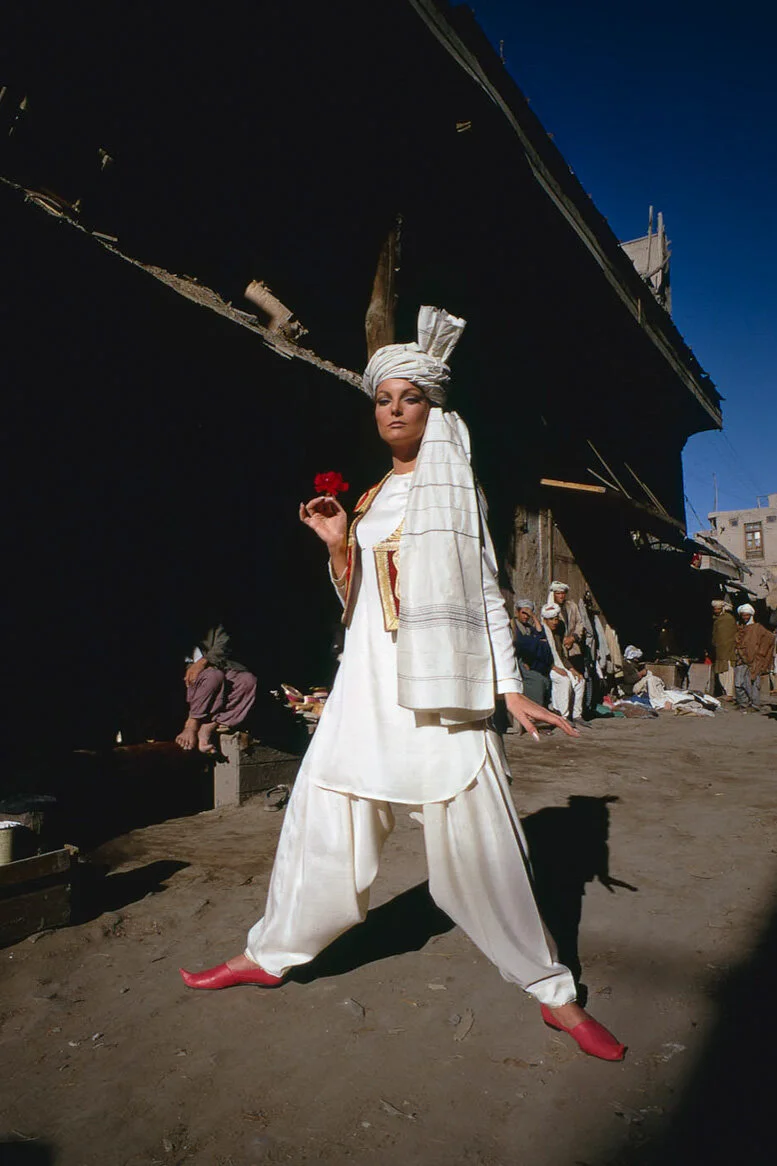
Redefining the Silhouette
Traditionally, the turban and the heavy waistcoat (waskat) were strictly elements of Afghan menswear. Tarzi's philosophy boldly recontextualized these masculine staples.
By tailoring them into elegant, draped womenswear, she projected both strength and high-fashion femininity, styling international models in ways that challenged the gendered norms of both Eastern tradition and Western couture.
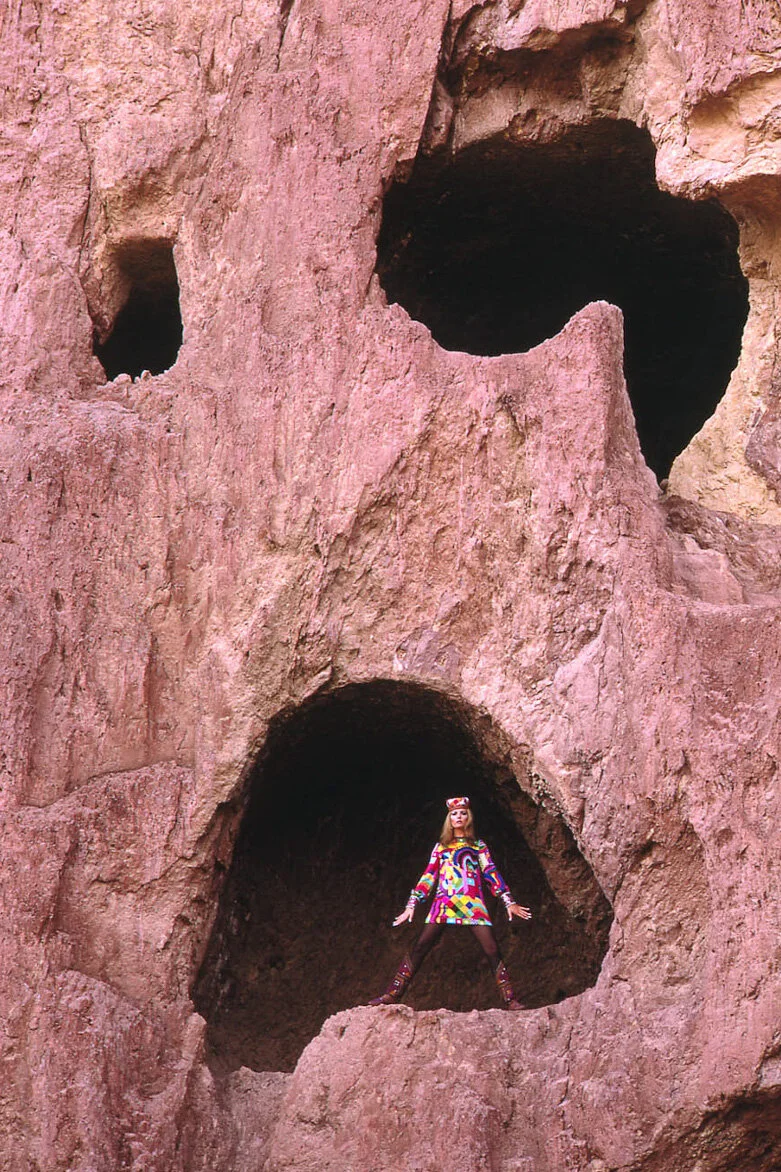
Elevating the Artisanal
Tarzi drew immense inspiration from the vibrant, geometric embroidery and patchwork of nomadic tribes. Instead of viewing these techniques as mere folk art, she recognized them as complex artisanal crafts.
She transformed these rustic textile traditions into striking, structured avant-garde fashion statements, elevating local Afghan materials and stitching to the demanding standards of Parisian haute couture.
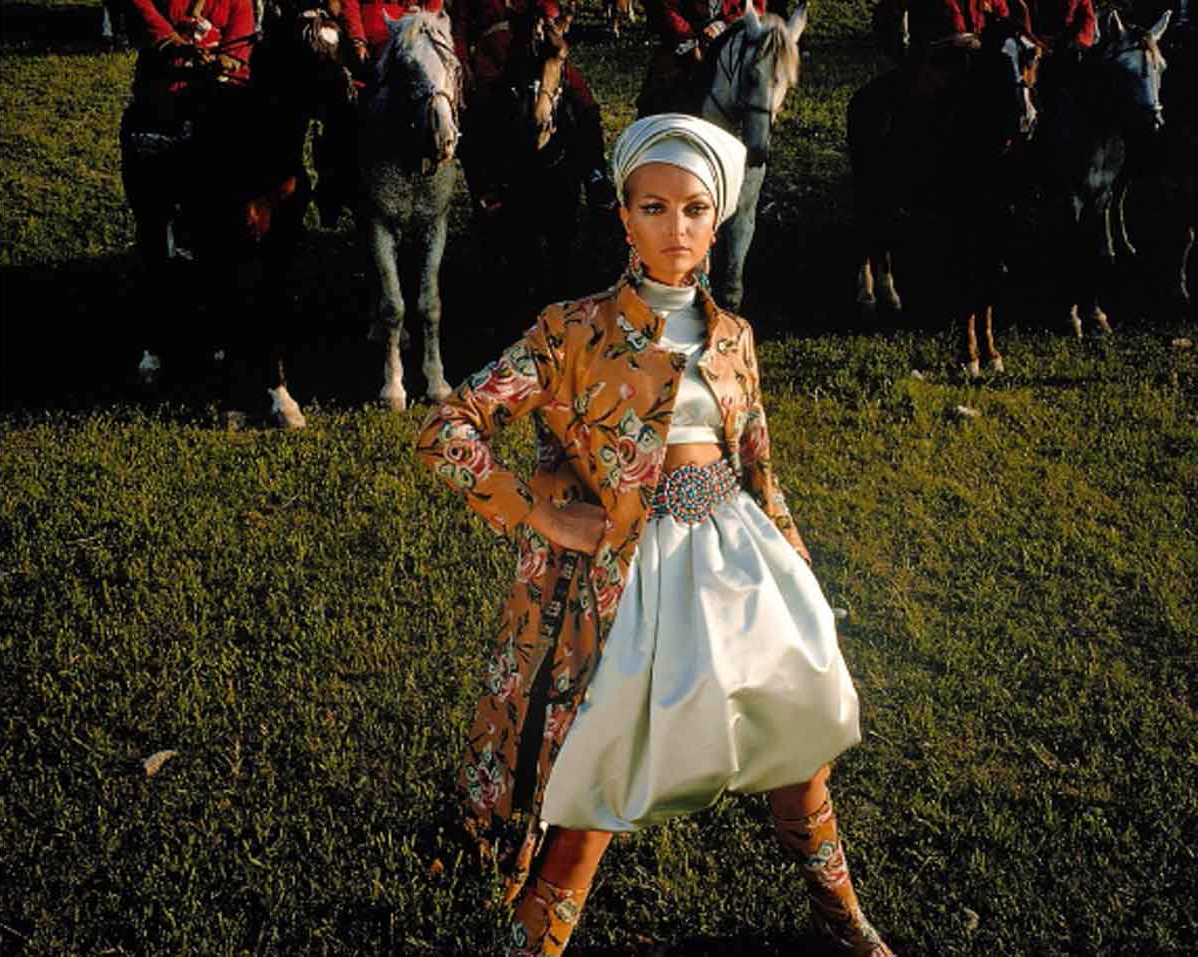
The Bohemian Global Standard
Perhaps her most enduring contribution to global fashion was the popularization of the Afghan coat. She took the traditional postin—a heavy, shearling-lined leather jacket traditionally worn by mountain shepherds—and refined it.
By adding delicate, exquisite floral embroidery and tailoring the fit for a modern silhouette, she helped spark a massive global trend. It became the ultimate must-have bohemian staple for the 1960s Western elite, forever linking Afghan heritage to the era's counterculture fashion.